Written By Fátima Leal, July 23, 2026
An encounter with Šárka Koudelová’s artwork will grip your beating heart. The rhythm will quicken as you take in a ghostly presence amidst striations of red, gold, and burnt orange. As you sit with the work inside her immersive spaces, a calculated process emerges, introducing new frontiers and interplanetary reflection.
To inform my encounter with the artist and curator’s practice, I pursued an interview that revealed an extraordinary approach to materials, history, and experience; Šárka’s visual storytelling takes you on a voyage to Mars and back, and then thousands of years in the future.
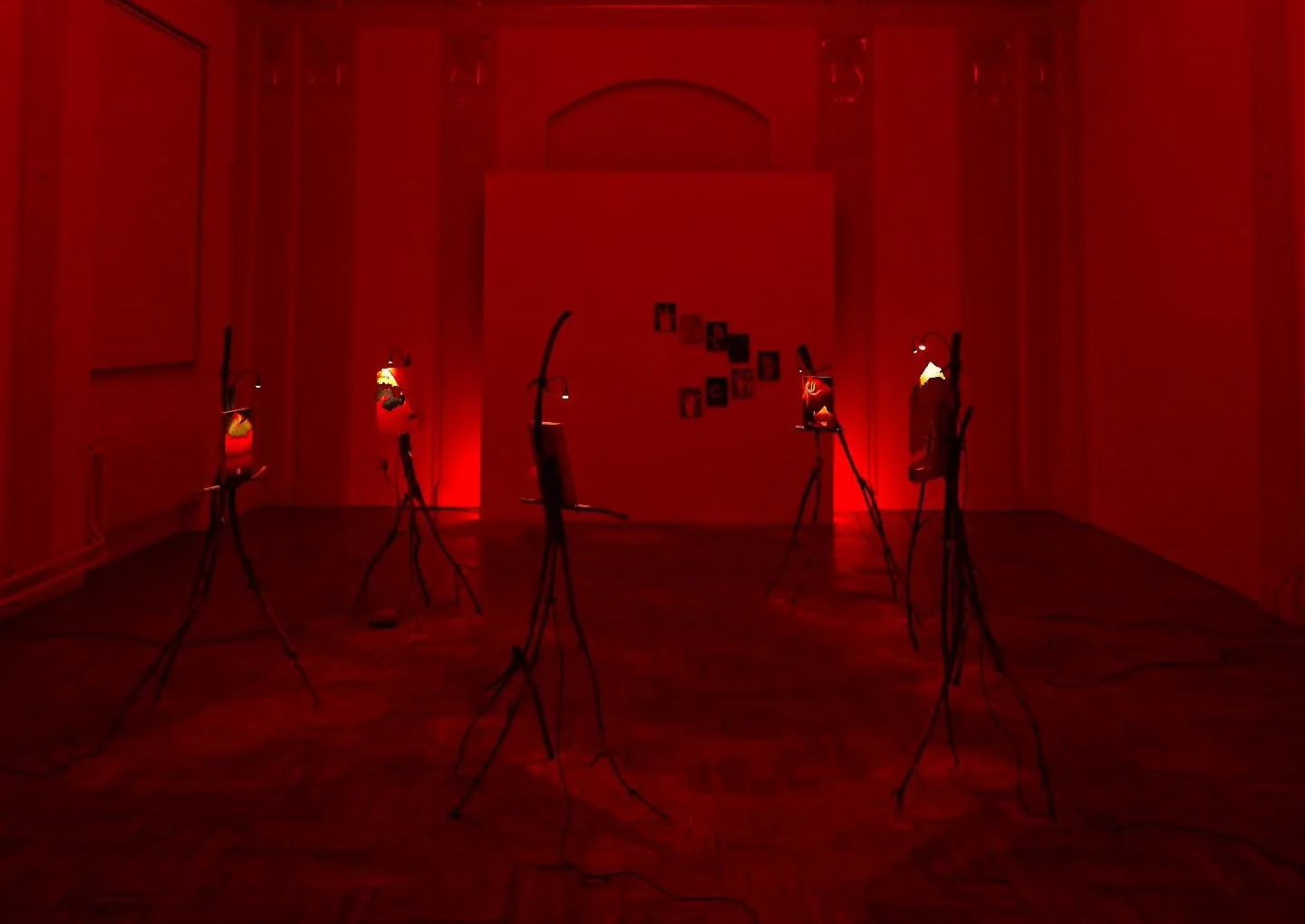
Her latest body of work, SOL, exhibited at the Museum of Arts and Design in Benešov, Czech Republic, proposes a definition of time. Her painting process holds on to slowness as an act of resistance. The most delicate of brushes is chosen to go across her canvas and record lines of Martian color. Much like the sediment layers on Earth, which have formed over billions of years, layer after layer.
SOL, 2026
In a moment where everything pushes for speed and immediacy, Šárka’s creations invite viewers to slow down and contemplate the immensity and relativity of space and time.
💡 Šárka Koudelová is a Czech artist and curator based in Praha. Her artworks ponder time, its passage, and people’s non-linear perception of it. Some of her recurring visual motifs are earth minerals and their surface appearance; each layer formed after the passage of centuries.
As a curator, she approaches exhibitions as living ecosystems, bringing together artists, objects, and ideas across different geographies and experiences. Her role is not simply to arrange exhibits, but to cultivate connections between the works of art, creating spaces where individual narratives settle into something larger, much like layers of sediment gradually forming a landscape.
Fátima Leal: How does your work as a curator influence the way you approach your own artistic practice? For example, do your roles ever conflict, or do they feed each other creatively?
Šárka Koudelová:
Being a curator is an important part of my job. During my studies, people used to tell me, “One day you will have to decide between your art practice and curating”. But I have found that they are two different streams of one passion. It’s all a form of communication with people.
My artistic focus is creating environments, and being a curator gives my practice a special “spice”.
Fátima Leal: What would you say curating has influenced the most in your approaches to an exhibition?
Šárka Koudelová:
Since 2018, I have been curating, and my relationship with other artists has been the most impacted. For our artists in residence, we do an open cycle of chapters. Each chapter is a group collaboration project.
I believe I have an advantage over other curators because I am able to understand other artists from an artistic perspective, and during this dialogue, we are able to inspire each other.
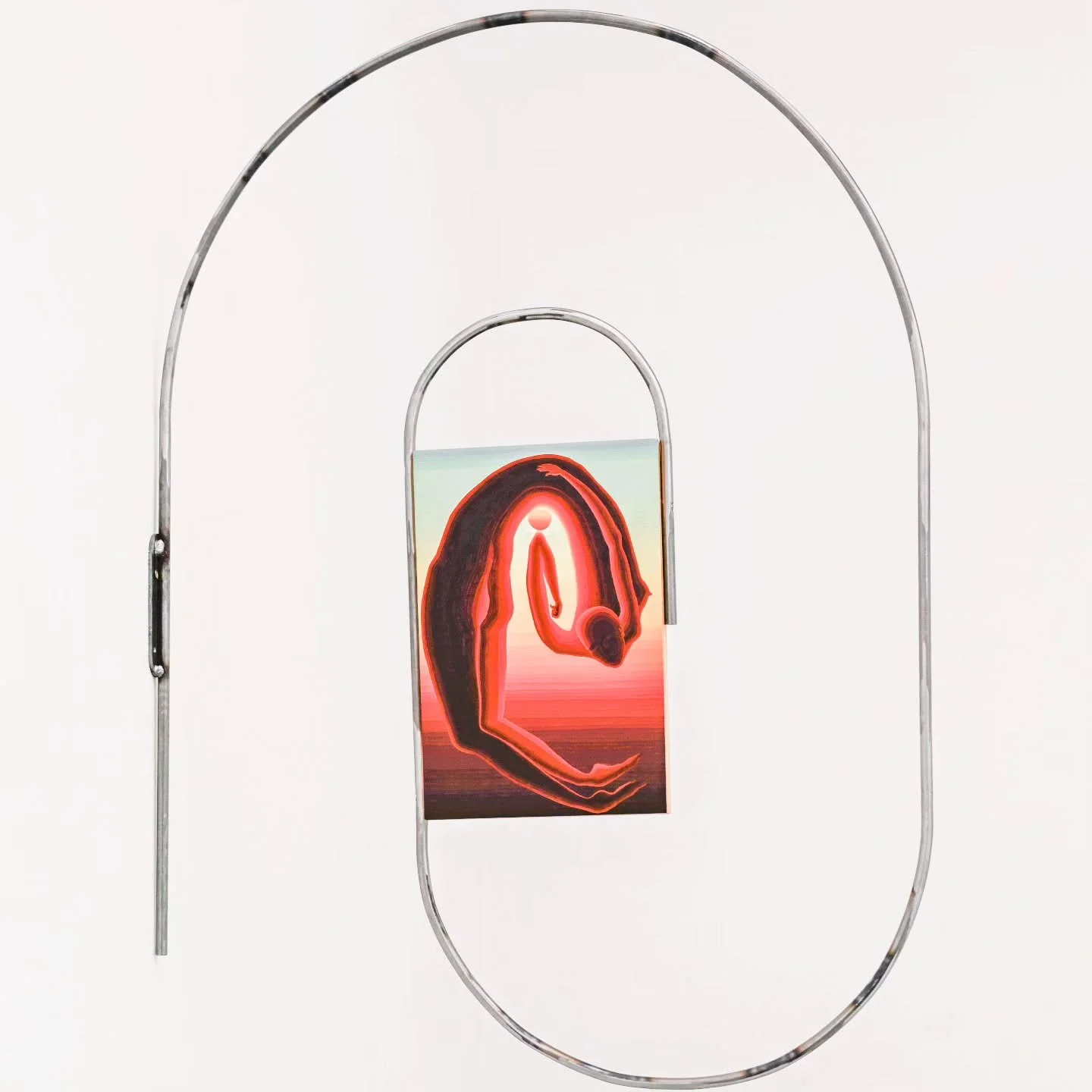
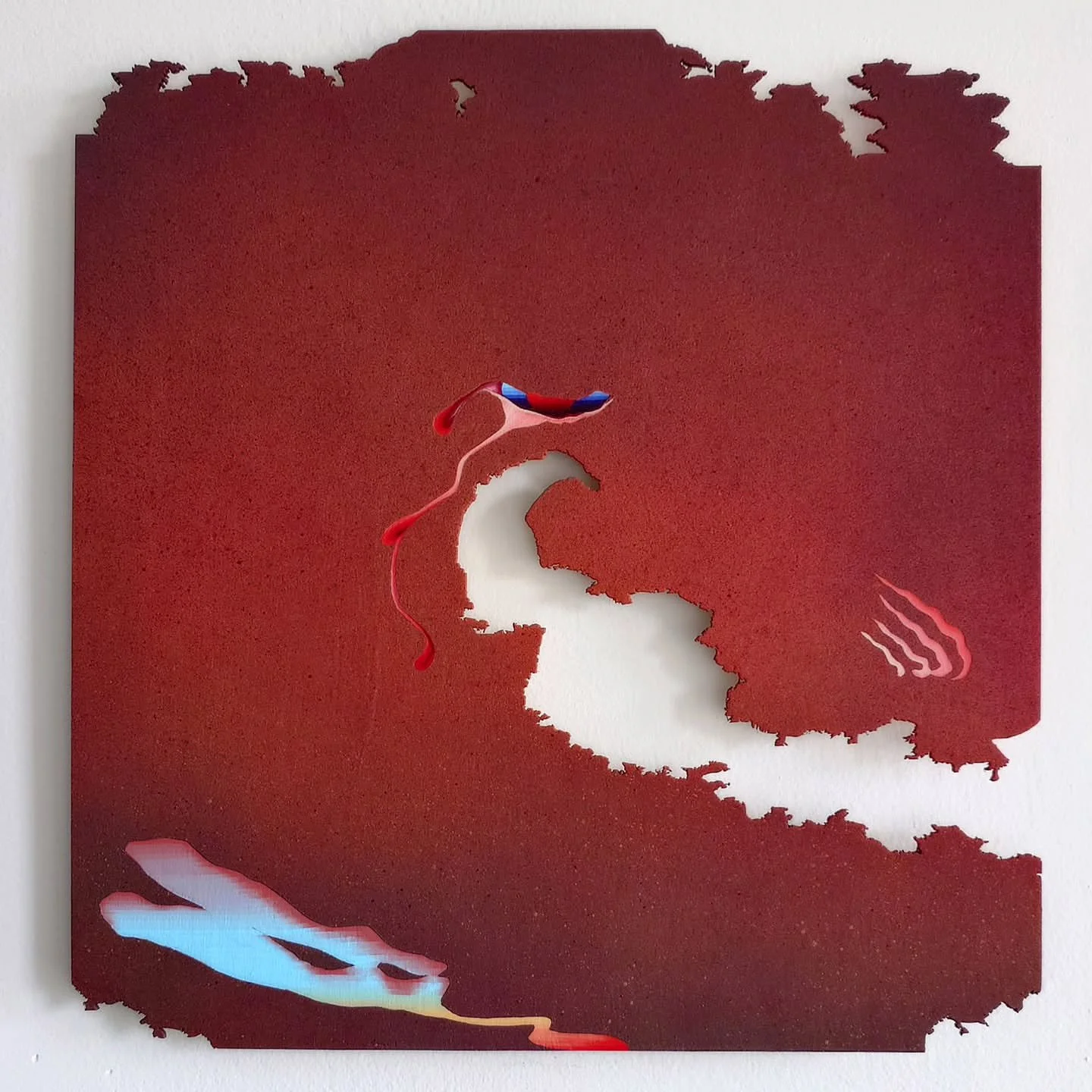
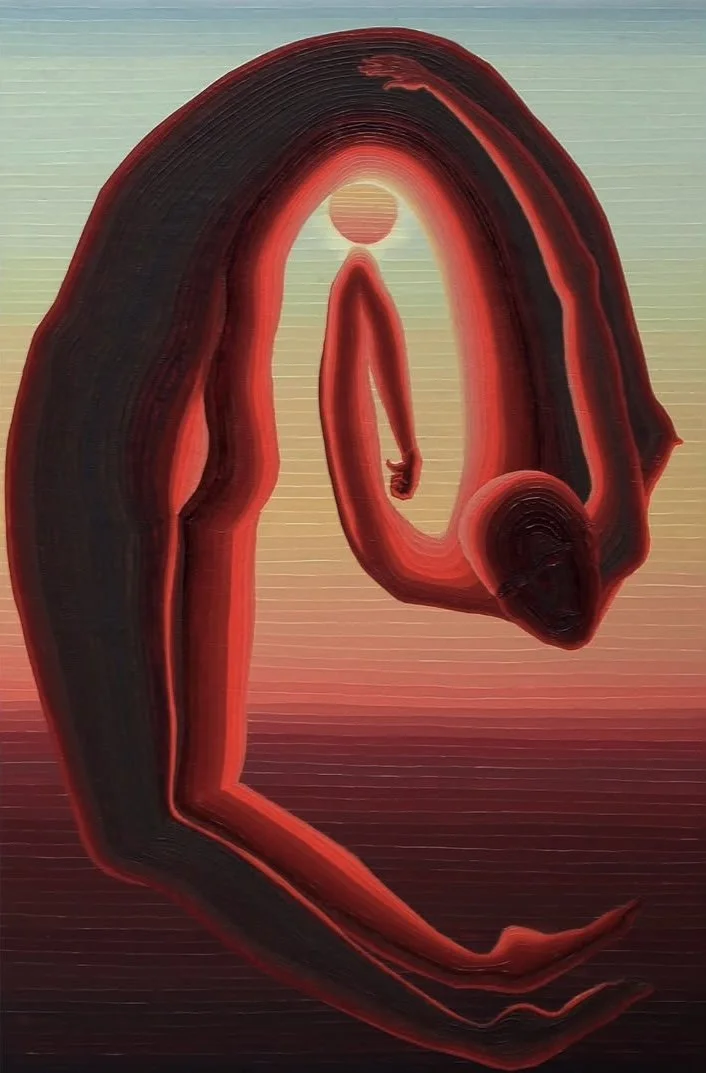
The Circumstances, 2025, acrylic on wood
In the Central European region, we tend to be kind of closed. But it is important to be in contact with other people in the world; it's a natural process of dialogue.
The word “Curation”, from Latin, means to take care of, and I tend to care a bit too much, but the only negative aspect of that is that it gets exhausting. Especially when taking care of people coming from other places in the world, such as the artists in residence that we host. The personal contact is so important since they have moved here to be part of this project. I have reflected a lot on these burgeoning relationships with artists. In my essay, “Temporary closeness.” I explore how I develop a very close and personal relationship with the artists in residence, but it's such a short time, only two to three months. Very often, when creating art, you touch on very intimate things, and for those two months, you end up developing a very intense emotional relationship with someone.
The most effective way for me to recover is when I create.
My painting method is very slow, so I need to concentrate. It often feels like “clausura,” from Latin, like the solitude of monks when they want to go through mental processes or they want to figure out the relationship with something bigger than themselves. It is in this type of solitude that I can recover.
However, I have been finding it difficult to find such times lately because I have a 5-year-old at home. I find it hard to find time to concentrate on just work; finding a balance has been difficult, so I do a lot of work at night.
But working mothers, and more specifically working mothers in art, should be their own separate set of interviews.
Fátima Leal: What first drew you toward the kind of visual language you use today?
Šárka Koudelová: I take inspiration from Renaissance paintings. I explore the relationship to the past a lot. My objects always have these kinds of roots.
Fátima Leal: There is an otherworldly and surreal quality to the spaces and compositions you design. Can you speak to the motifs you keep coming back to, such as body parts, vibrant striations, and the feminine form?
Šárka Koudelová: Sometimes I use motifs from art history, but I also explore my relationship with time and its passage. I feel decolonization is a huge topic in my practice. We should decolonize our relationship with the past. Sometimes galleries and their spaces create a detachment between the exhibitions and the artworks. The white cube tends to alienate the narrative being created.
Body parts and geological materials are long-term topics. My interest in geology materials is a metaphor for the human body and experience; this is why I work with clay to create bones.
The Circumstances, 2025
As for my process, I started painting in thin layers during my 2nd or 3rd year in the academy. These layers then developed into painting hyper-realistic minerals and their layers. When painting, I always think:
“In thousands and thousands of years, we will just be a thin layer of sediment.”
I create movement with a thin brush to build my motif in layers. I would say it's a conceptual way of painting in that I build time with each of my paintings.
The feminine form is also an important topic for me. In the Czech Republic, there are ongoing discussions about the leading roles of women, and more specifically, the lack thereof. For instance, the art academy has had no leading women since its foundation, and there has been no painting studio leader either. And this plays such a big role in how painting is perceived! It determines what paintings are considered of high quality.
Fátima Leal: What risks have been most important for your development as an artist?
Šárka Koudelová:
I was stubborn in wanting to keep my paintings in a small format. Others were always telling me to go big on my canvas, but for me, my decision to keep my small painting format is a form of resistance
My small-format creations are often associated with weakness, but to that I ask, why is painting small a weakness?
Small art formats speak to decolonization. Persian miniatures, for example, from a Western understanding, are considered decorative, but why? We must dissect these kinds of thoughts to decolonize our point of view.
I need to have a physical relationship with my paintings, maybe that is why I keep them small. I think of my paintings as parts of my body, objects that I can take with me.
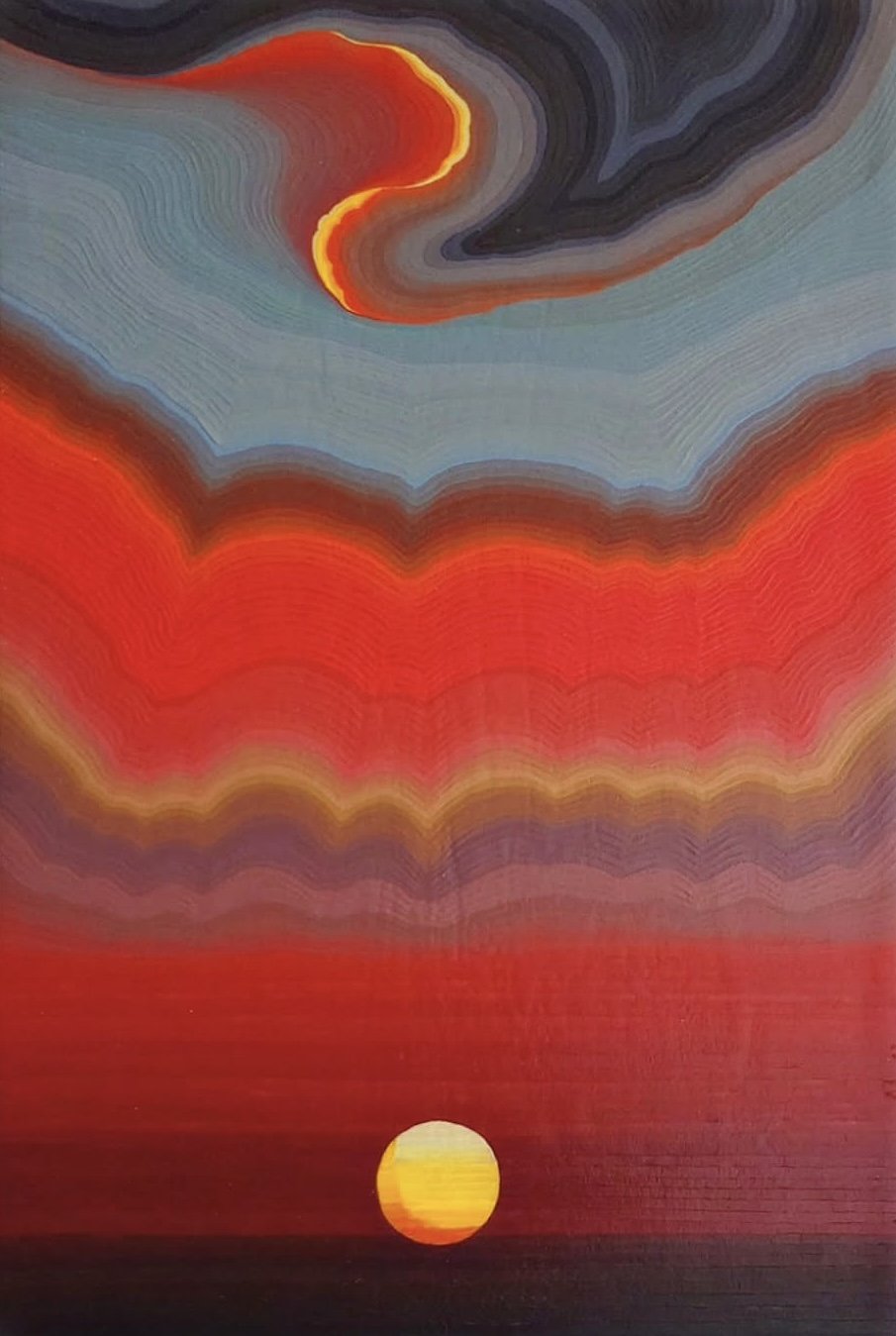
Low Sun, 2025
Fátima Leal: Your work seems to move beyond the traditional frame and presentation. What motivates that shift for you? What does the frame represent to you conceptually? For example, do you see the physical boundaries of an artwork as limiting, political, or something else entirely?
Šárka Koudelová:
Laser cutting is easily accessible. The opportunity to create another shape that is not a rectangle is another form of communication, because the shape itself is a decision. And shape is always personal. I do a lot of photography in my own time, on trips with family or other occasions, and one of my recent personal photographs has inspired the shape of my work. This way, I connect my personal experiences to my work.
The spirals on my work also take inspiration from Gothic paintings. A lot of the time, religious paintings with Jesus, for example, bending and spiraling on rocks is inspiration for me. I am interested in the ways people have depicted contorting bodies in the past.
Fátima Leal: How do materials guide your decisions during the creative process?
Šárka Koudelová:
Stories connect directly with materials. I use Himalayan salt a lot in my work, not only because I like it, but because it bears its own statement and context. I use materials as a metaphor for geological materials. I perceive these materials as universal, as something that almost anyone can relate to. For example, when I use a tone of sand that comes from a specific place, people are able to recognize themselves and their stories in this sand. Moreover, there are 1000 stories recorded in sand.
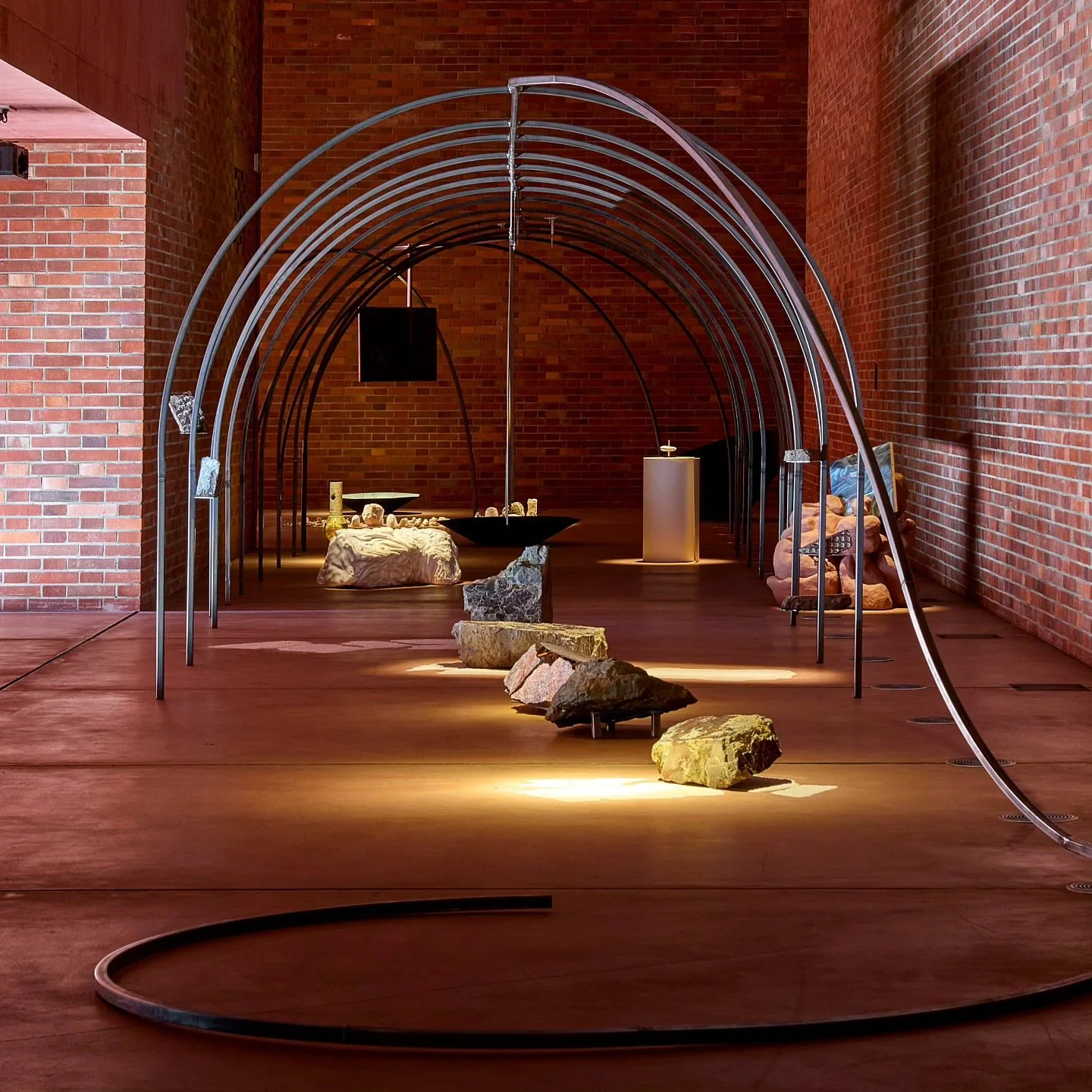
Spiral, 2026
Fátima Leal: Has curating changed the way you think about audience experience and exhibition space?
Šárka Koudelová:
Yes. I aim to create something bigger than the viewer, because I believe there's always something bigger than us. I want to represent the human experience as something interconnected with all the bodies around us.
Fátima Leal: Any last thoughts you might want to share on your exhibition or artistic practice?
Šárka Koudelová:
As a society, we perceive nature as something disconnected from us, just a source of anything we might need, and we fail to see that we are part of nature.
This is also the basis of the group projects I organize and curate. I take inspiration from the essay “Bodies of water.” This text takes a philosophical stand on how our bodies are created from mostly water, so we should care for the bodies of water around us because we are one of them.
Thus, the group exhibitions that I organize are called “Bodies of Dust”, focusing on the solid material on Earth, because we are also created from minerals and chemical particles we can find on our planet and in space.
I encourage others to recognize that we are constantly and relentlessly pushed to seek something new. A new experience, a new impulse, something newer and shinier. But we should stop and give ourselves a moment to experience everything on a deeper level.
Truly digest ideas and live with them. Calm ourselves down and try to deeply understand something.
After listening to Šárka’s reflections on time, creation, and care, I find myself returning to our neighboring planet, Mars. Perhaps what her work exposes is not a distant world where everything takes longer, but our own world, where we rarely allow ourselves the time to feel and observe truly. Through each meticulous layer of paint, each geological reference, and each invitation to pause, Šárka reminds us that meaning is not found in speed, but in attention and deliberate slowness. Maybe the opportunity is not in learning how time moves on other planets, but in rediscovering how to inhabit our own on Earth.
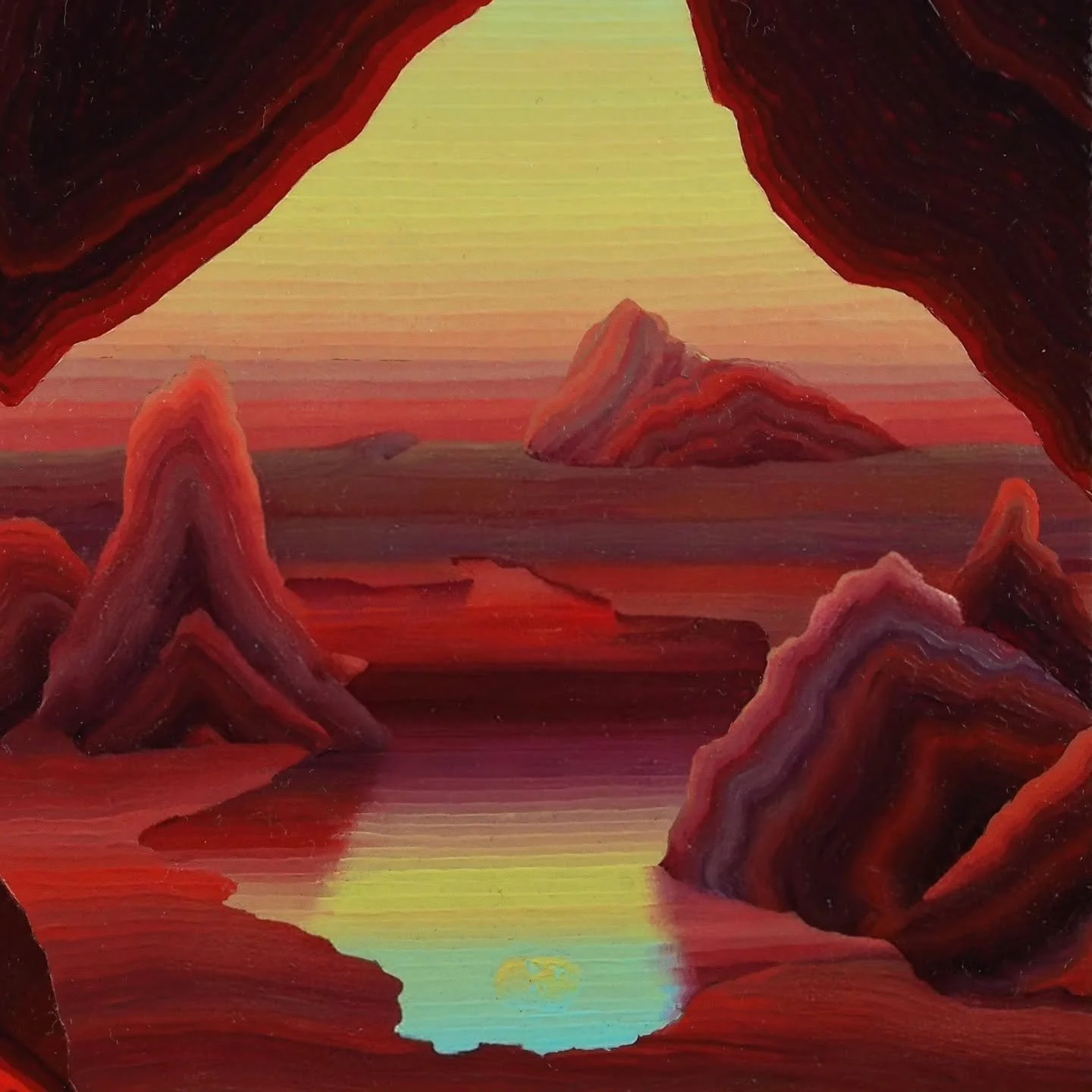
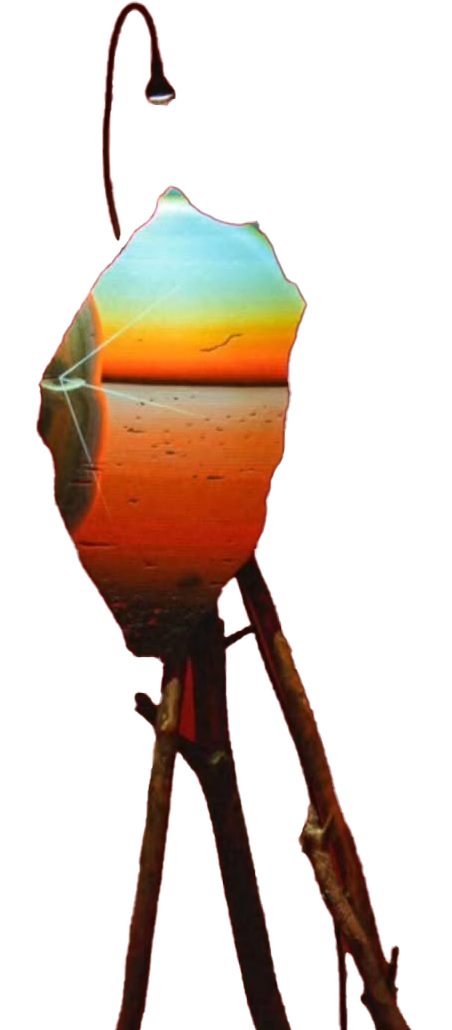
Detail of Halwasa, 2026, acrylics on wood