Written by Sophia Hart, June 2, 2026
When I was growing up, I often thought about how unlikely my existence was. I would wonder, why this place, why this time in history, why these parents? I’d think of the billion other possibilities and childhood experiences on Earth. Each distinctly rare and special. As the novelty of existing wears off a bit, there are key moments that spark the nostalgia of that childhood wonder, like discovering the artwork of Daryl Feril.
I was immediately pulled into the story being told. A boy alone in the wilderness, trekking beneath bowing trees and shady leaves. Wanting to know more, I requested an interview. As we exchanged a few early words, Feril admitted he had recently committed to painting, sacrificing a successful illustration career. With this in mind, I wrote a handful of interview questions.
To my delight, his answers not only speak to the lasting power of storytelling and interiority in contemporary painting but also signal the rise of human specialization and “slowmade” art.
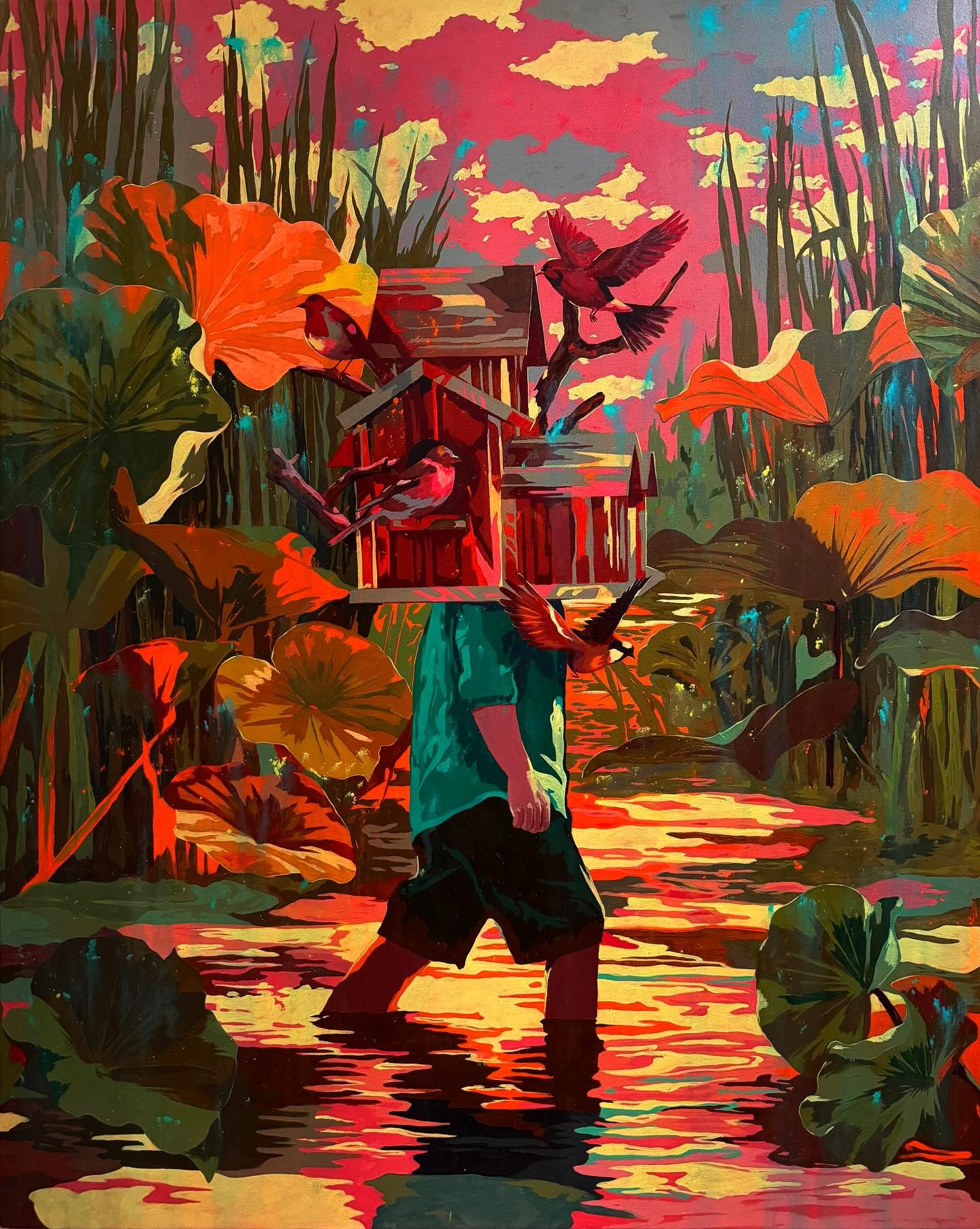
To Carry a Home, Acrylic, 2026
Hart: Describe your decision to commit to painting. Was there an experience, realization, or interaction that impelled you particularly?
Feril:
For the past few years, I’ve been actively joining gallery exhibitions in the Philippines, though not always consistently. I had to focus more on my work as an illustrator since it helped sustain both myself and my personal projects, but eventually it became difficult balancing commercial work and painting at the same time.
It wasn’t until 2024 that I found the courage to fully commit to painting again. Visual art has always felt like an unfamiliar territory for me, which is also why it continues to challenge and push me to grow. I realized how much I had evolved since my last major exhibition, and I wanted to share that growth through a new body of work.
So, when the opportunity came to hold a solo exhibition at Orange Project, I took it. I sacrificed a few illustration projects to give myself the time and space to fully commit to the exhibition and the process.
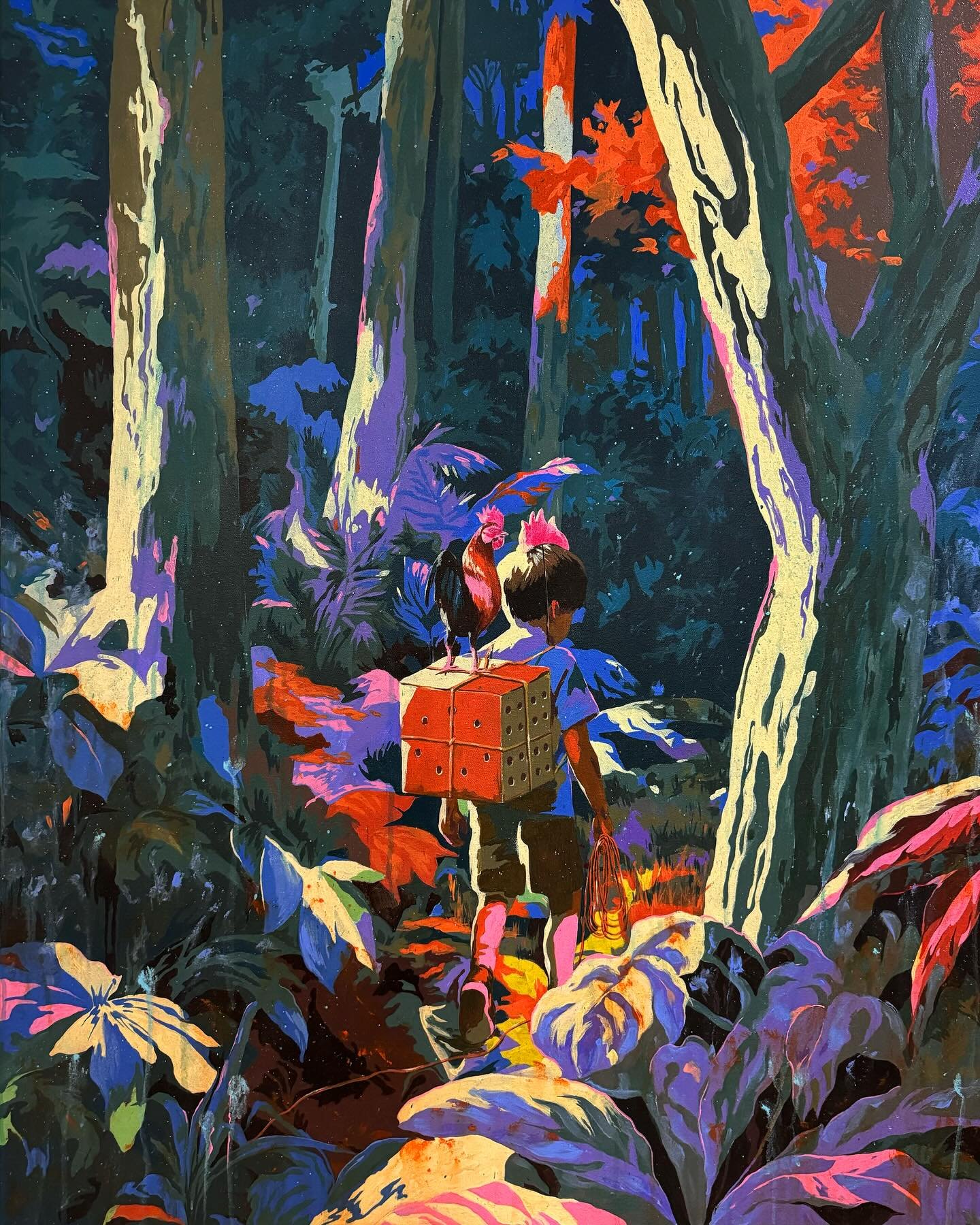
Wayfarer, Acrylic, 2025
Hart: Your work features children alone or adventuring among vibrant naturescapes. Is this a motif you were exploring before committing to painting, and why does this motif speak to you? Is there something deeper you are aiming to communicate beyond the “inner child” that is so often talked about?
Feril:
Growing up, we didn’t have a permanent home. Because of my parents’ work, we constantly moved from one city to another, which was difficult for me at a young age. I was always adjusting to new environments, cultures, and people, so it became hard to build lasting connections.
I think that’s why children often appear in my work. They reflect the feelings of exploration, uncertainty, and quiet observation that I experienced growing up. Nature, on the other hand, became a marker of memory and a place of comfort for me. That’s also why some of my subjects are often surrounded or veiled by natural elements, almost like a kind of shelter or fortress.
Hart: Kindly share some insight into additional symbols that appear in your work and why you choose to repeat certain symbols and forms.
Feril:
I’m fascinated by the morning glory because of how it can resemble a trumpet, an ear, or even a megaphone. For me, it reflects the desire to call out to the world, to be heard, but also the act of listening more closely to one’s surroundings. I’m also drawn to its ephemeral beauty since it only blooms for a short period of time.
Another recurring symbol in my work is the birdhouse, which represents temporary shelter and nesting. I think these repeated forms connect deeply to my experience of constantly moving from one place to another and the search for comfort, belonging, and connection within unfamiliar spaces.
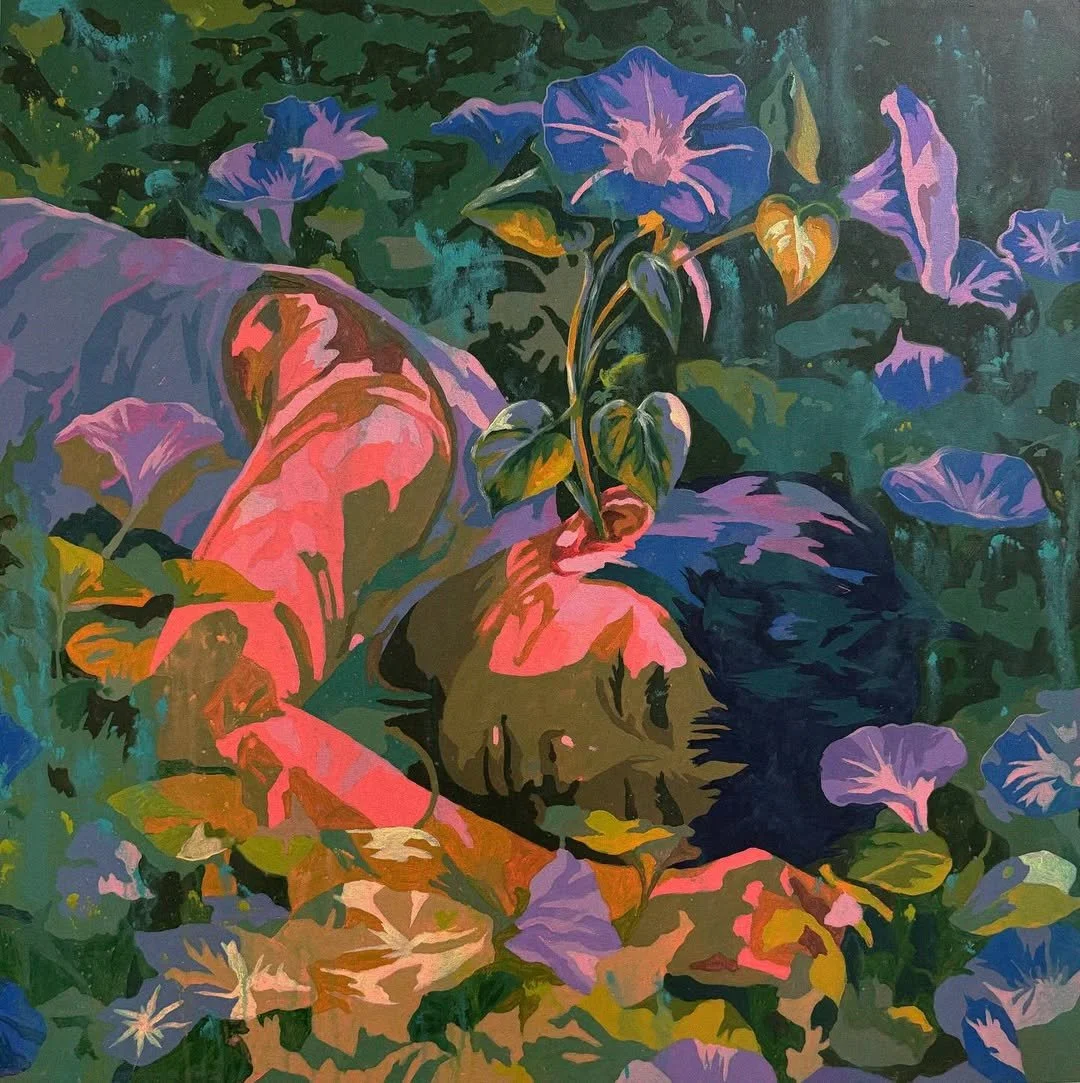
I can still hear it from here, Acrylic, 2025
Hart: How does your history of professional illustration influence your approach to painting from a design, style, and color perspective?
Feril:
My background in illustration and graphic design became a huge advantage when creating my recently concluded solo show. It helped me think beyond just individual paintings and focus more on creating an overall experience for the audience.
Because of that background, I became more conscious of how colors, composition, and space can communicate emotion and narrative. It allowed me to build not just a story within the paintings themselves, but also through the way the gallery space was designed and experienced as a whole.
Hart: It is refreshing to see lighthearted artworks among an art world that often fixates on vulgarity, negativity, and politics. Do you see your work as a light in the darkness?
Feril:
Some of my paintings actually carry slightly darker undertones beneath their vibrant colors and playful imagery. I think I’m interested in creating a balance between beauty and vulnerability, where difficult emotions can exist in a softer and more approachable way.
I believe in the power of color and storytelling, and how they can capture emotions that genuinely connect with viewers. While my subjects are often rooted in personal experiences, I also want the work to feel open enough for people to see parts of themselves in it. If the paintings bring a sense of comfort, reflection, or quiet hope to others, then I think that’s where their light comes from.
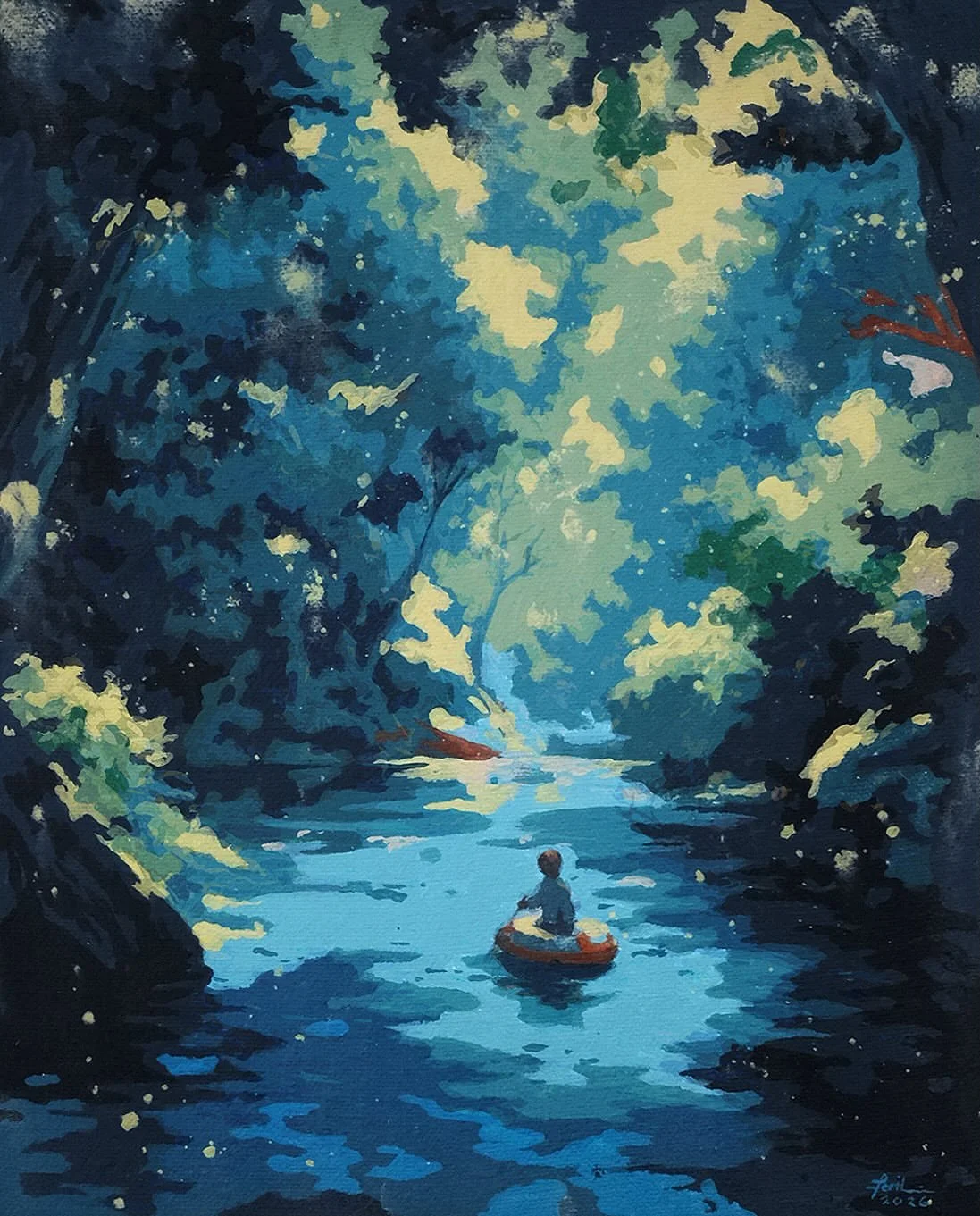
Sail, Acrylic, 2926
After meditating on Daryl’s interview answers, it dawned on me that his choice to move from commercial art to hand-painted, intimate storytelling reflects a larger creative movement. As images can be produced instantaneously with automations, people crave handmade and deeply personal artifacts. Not only does this dispel fears that AI will replace artists, but it also signals a shift in contemporary art: people want to consume art crafted with obvious skill and rich storytelling. The reign of abstraction and readymade art may be sunsetting as landscapes, portraits, and Renaissance-like sculptures rise again. Maybe our childlike wonder can be our guide into this new era.