Written by Sophia Hart, May 22, 2026
When Yves Klein declared that the blue sky was his first artwork, he propelled the art world on a philosophical crusade into the void, where abstract artists take turns wrestling with materiality, color, and form. Each claiming victory over reality, exhibiting their battle scars on splattered canvases. Now accounting for roughly 50% of contemporary art sales globally, it’s safe to say the abstract crusaders have conquered the art world.
In this century, a novel vanguard is piercing the void: digital artists wield swords of creative code and algorithms. Inspired by the victories of the last century, abstract digital artists are outdoing their predecessors. Whereas abstract expressionists and color field artists celebrated the artist’s subjective gesture as truth, the digital artist invents a subjective yet self-sustaining reality. Transcending a frozen instance of expression into an evolving, infinitely unique experience.
Anton Dubrovin is one such artist. The Kazakhstan-born creator credits predecessors such as Barnett Newman, Yves Klein, Mark Rothko, and Josef Albers as his inspiration. He divulged, “I wanted to know if those ideas would work in contemporary mediums, so I started to create artworks myself.” He is a self-described digital artist who creates “abstract works using modern media such as code, graphics, software, and AI, focusing on creating an aesthetic experience.”
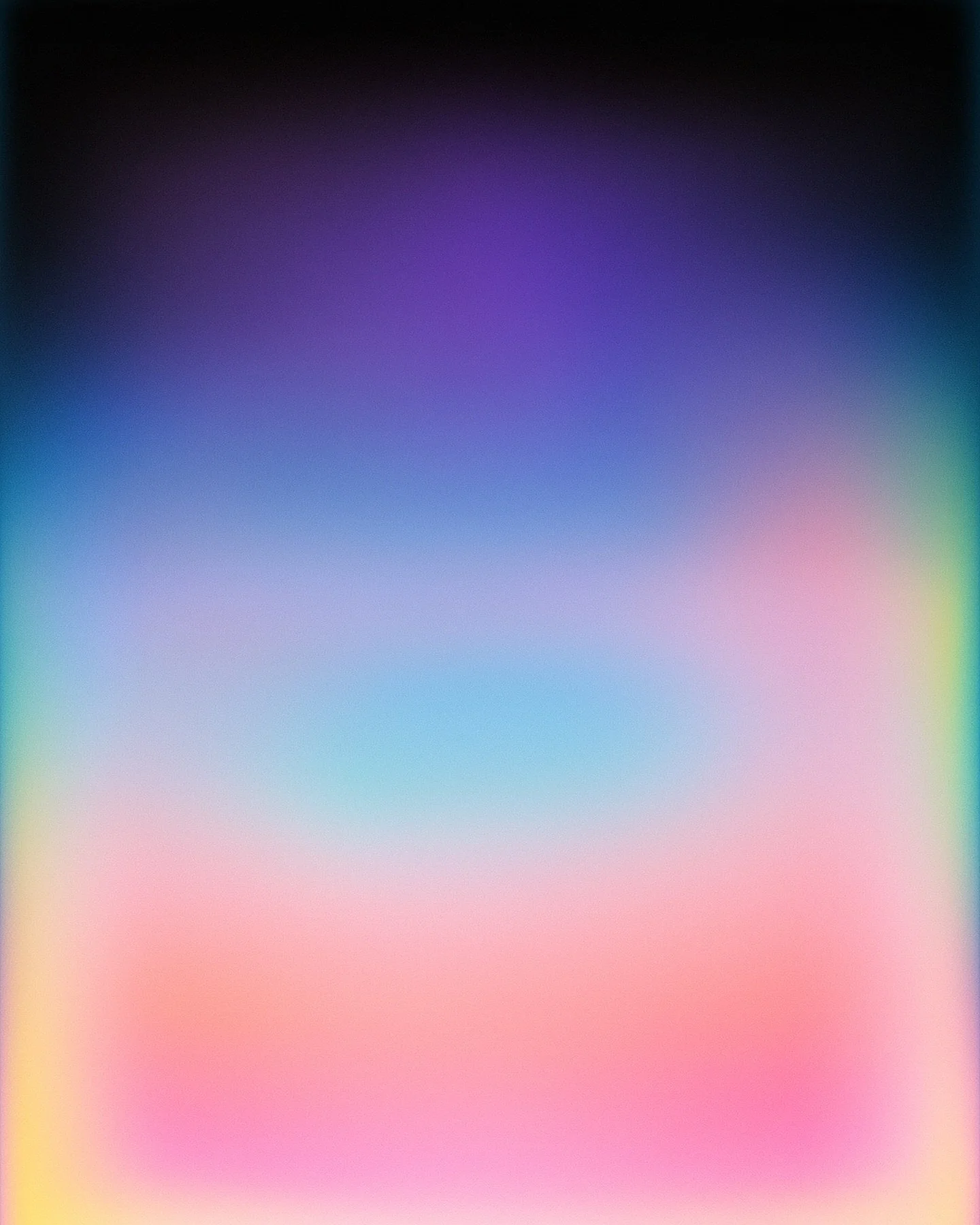
Anton Dubrovin, Fall 25, 2025, Creative Code
Dubrovin’s work not only challenges the philosophical perfection of his predecessors’ artifacts but also usurps the accessibility. Viewers from all over the world can tap into the aesthetic experience on their own screen, transforming their personal space. This capability multiplies the subjective experience for viewers, further perfecting the philosophical aim to create infinitely subjective mediation tools. Dubrovin says, “What I love about digital art is that it can become a deeply personal experience. A screen in your one space can be enough to create the conditions for something truly profound.” Klein once said, “At first there is nothing, then there is a profound nothingness, after that a blue profundity."
Despite the throughline, it’s not likely that the early vanguard would tip their hats to Dubrovin. Traditional abstract painters are apt to dismiss work that lacks tactile, material, or embodied qualities. Out of context, this kind of push-back might be justified, but amidst a reality increasingly mediated by digital mediums, the mission of artists like Dubrovin is quite obvious. In fact, the tension between abstract painting and abstract digital art reinforces the core thesis: digital code achieves a purer, more simulacral abstraction.
Dubrovin goes further, saying, “Maybe everything I’ve created is really just one large work unfolding in real time.”
He details his creative process as “rather intuitive.” Often applying new techniques to existing works, he designs the algorithm to establish conditions, “but the artwork itself only comes alive through movement and the glow of the screen…meant to exist as an aesthetic experience…when [he feels] that experience, [he knows] the piece has fully emerged.”
Could it be that the pure experience Dubrovin achieves is simply mistaken by a worn-out rebellion steeped in institutional bias? When 50% of contemporary art sales globally are of abstract art, could it be that the rebellion has become the empire?
Ultimately, these questions may point to a deeper curiosity about the core ambition to transcend material representation. Is it simply an aesthetic ambition to tickle the senses, or a bona fide search for existential, human meaning? The void is calling. What is your answer?
Background artwork: Soft Continuum 2, 2026